
December 12, 2025
Understanding the Google Core Update of December 2025: What It Means, Who It Affects, and How to Respond
December 11, 2025
Generative Engine Optimization (GEO): The Complete Guide to Ranking in AI Search
December 10, 2025

Author:
.png)
Keyword research has transformed from a manual, time-consuming process into an intelligent, automated workflow that delivers better results in a fraction of the time. With search engines processing over 8.5 billion searches daily and 53% of all web traffic coming from organic searches, mastering ai keyword research has become essential for any successful seo strategy.
Traditional methods of manually brainstorming keyword ideas and analyzing search volume one by one are becoming obsolete. Today’s most successful SEO professionals use ai tools to identify keywords, analyze search intent, and discover content opportunities that would take weeks to uncover manually.
What you’ll learn:
AI-powered keyword research leverages artificial intelligence and machine learning algorithms to automate the discovery and analysis of search terms. Unlike traditional keyword research tools that rely on basic databases, ai based keyword research uses natural language processing to understand semantic relationships between keywords, user behavior patterns, and search engine data.
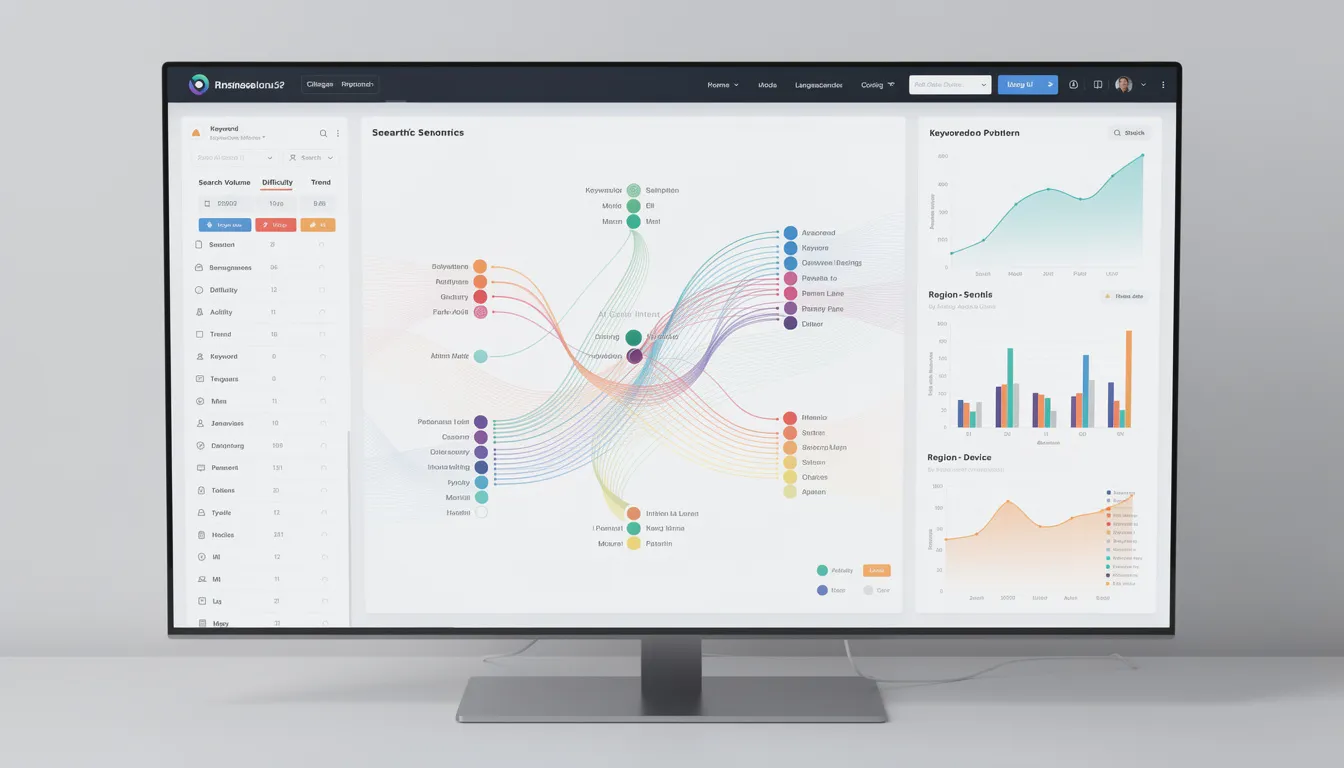
Here’s how ai tools revolutionize the keyword research process:
This approach differs fundamentally from manual research because AI can process vast datasets simultaneously, recognize subtle semantic connections, and predict user behavior based on historical search patterns. The result is more comprehensive keyword lists that align with actual user needs rather than guesswork.
The integration of artificial intelligence into seo tasks has created unprecedented opportunities for marketers to improve their organic traffic and search engine optimization efforts. Here’s why ai powered tools are changing the seo game:
Speed and efficiency transforms hours of manual work into minutes of automated analysis. Traditional keyword research might take an entire day to generate a few hundred relevant keywords. AI can analyze thousands of search phrases, cluster them by topic, and prioritize them based on difficulty and opportunity within minutes.
Semantic understanding enables ai tools to identify related keywords that manual research often misses. When you input a seed keyword like “content marketing,” AI recognizes semantically related terms like “content strategy,” “editorial calendar,” and “brand storytelling” that share similar user intent but might not contain the exact phrase.
Large-scale data processing allows AI to analyze search patterns across millions of queries simultaneously. This comprehensive analysis reveals long tail keywords and niche opportunities that would be impossible to discover through traditional search engines or keyword research tools alone.
Real-time trend detection helps identify emerging keywords before they become highly competitive. Machine learning algorithms can spot rising search volume patterns and seasonal trends, allowing you to create content for keywords while they’re still accessible.
Competitive gap analysis automatically identifies keywords your competitors rank for that you’re missing. AI tools can analyze competitor websites, extract their target keywords, and cross-reference this data against your current keyword strategy to reveal untapped opportunities.
Intent classification removes the guesswork from understanding search intent. Instead of manually analyzing search engine results pages for each keyword, AI can automatically classify whether users searching for specific terms want information, are ready to purchase, or are comparing options.
This comprehensive workflow will help you begin keyword research using ai powered tools and techniques. Each step builds upon the previous one to create a complete keyword strategy that drives relevant traffic and supports your broader seo efforts.
The foundation of successful ai keyword research starts with selecting the right combination of tools for your budget and needs. You’ll want to use both free ai tools for brainstorming and paid platforms for validation and metrics.
Free AI options provide excellent starting points for keyword ideation:
Paid AI-enhanced seo tools offer advanced features and crucial search metrics:
Hybrid approach strategy: Use free ai tools for initial brainstorming and idea generation, then validate promising keywords with paid tools that provide accurate search volume, keyword difficulty, and competitive analysis data.
Consider your target audience size, competition level, and budget when selecting tools. Small businesses might start with free options and one paid tool, while agencies managing multiple clients typically need comprehensive platforms with advanced ai seo features.
Transform your basic business understanding into a comprehensive list of seed keyword ideas using targeted AI prompts. This step replaces the traditional brainstorming phase with systematic, ai-powered ideation.
Start with these specific prompts for ChatGPT or similar ai tools:
Primary ideation prompt: “Generate 20 long-tail keywords related to [your topic] with commercial intent. Include variations that potential customers might use when they’re ready to purchase.”
Competitor analysis prompt: “Analyze the keyword strategy for [competitor website]. What search phrases would their target audience use to find their services? Include both branded and non-branded terms.”
User journey prompt: “Create keyword suggestions for each stage of the customer journey for [your industry]. Include awareness stage (informational), consideration stage (comparison), and decision stage (transactional keywords).”
Local business prompt: “Generate location-based keyword variations for [your service] in [your city/region]. Include ‘near me’ variations and local modifiers.”
Refine your prompts for better results by providing context about your target audience, business model, and geographical focus. For example, instead of asking for “SEO keywords,” specify “B2B SaaS SEO keywords for marketing managers with 5-50 person teams.”
Use competitor analysis to discover keyword gaps by prompting AI to analyze successful competitor content and identify search phrases they target but you currently don’t address in your content strategy.
Understanding search intent transforms your keyword list from a collection of phrases into a strategic roadmap for content creation. AI excels at interpreting the motivation behind search queries and categorizing them appropriately.
Use these prompts to classify keywords by intent:
Intent classification prompt: “Classify these keywords by search intent - informational (learning), commercial (comparing), transactional (buying), or navigational (finding specific sites): [list your keywords]”
User motivation prompt: “For the keyword ‘[specific keyword]’, explain what users are trying to accomplish. What problem are they solving? What stage of the buying journey are they in?”
Content angle prompt: “What type of content would best serve users searching for ‘[keyword]’? Should it be a how-to guide, product comparison, buying guide, or something else?”
Validate AI intent analysis by reviewing actual search engine results pages for your keywords. Look for SERP features like featured snippets (often informational intent), shopping results (transactional intent), or local pack results (navigational intent with local modifier).
Understanding search intent helps prioritize keywords that align with your business goals. If you’re running an e-commerce site, transactional keywords should be your primary focus, while blog content might target informational intent to build authority and attract potential customers early in their journey.
This analysis also guides content format decisions. Commercial intent keywords might require detailed comparison pages, while informational keywords work well as comprehensive guides or tutorials that demonstrate expertise.
Organizing your expanded keyword list into thematic clusters creates the foundation for a comprehensive content strategy. AI-powered clustering identifies semantic relationships that manual grouping might miss.
Topic clustering prompt: “Group these keywords into topic clusters and label each cluster by theme: [paste your keyword list]. Explain the relationship between keywords in each cluster.”
Content pillar prompt: “Create content pillar topics from these keyword clusters. For each pillar, suggest 3-5 supporting subtopics that could become individual articles or pages.”
Semantic relationship prompt: “Identify semantic relationships between these keywords: [list]. Which ones should target the same page versus separate pages?”
AI clustering reveals opportunities to create comprehensive content that targets multiple related keywords simultaneously. Instead of creating separate pages for “email marketing tips,” “email marketing strategy,” and “email marketing best practices,” you might create one authoritative guide that targets all three.
Look for clusters that represent different stages of the user journey. A “social media marketing” cluster might include awareness-stage keywords like “what is social media marketing” alongside decision-stage terms like “best social media marketing tools.”
Use clustering insights to plan your content architecture. Large clusters with high search volume might become pillar pages, while smaller clusters could be supporting articles that link back to the main topic.
Combine AI creativity with real search data to filter and prioritize your keyword opportunities. This step separates promising keywords from those that might not deliver meaningful results.
Use traditional keyword research tools to gather essential metrics:
Search volume analysis: Import your AI-generated keywords into tools like Semrush’s keyword magic tool or google keyword planner to determine monthly search volume. Focus on keywords with sufficient search volume to drive meaningful traffic for your domain size.
Keyword difficulty assessment: Evaluate competition levels using tools that analyze the authority and content quality of current ranking pages. Set realistic keyword difficulty targets based on your domain authority and content resources.
SERP feature analysis: Identify keywords where search engine results pages include featured snippets, “People Also Ask” boxes, or other features that might impact organic traffic potential.
Seasonal pattern review: Check google analytics or keyword tools for seasonal trends that might affect when you should target specific keywords.
Filter your AI-generated list based on opportunity scores that combine search volume with competitive difficulty. Prioritize keywords where you have a realistic chance to rank on the first page within 6-12 months.
Consider the commercial value of keywords, not just search volume. A keyword with 500 monthly searches but high purchase intent might be more valuable than a 5,000-volume keyword that attracts browsers rather than buyers.
Transform your validated keyword clusters into actionable content plans that address user needs while targeting your priority search phrases.
Content outline prompt: “Create a detailed content outline for an article targeting the keyword cluster [cluster name]. Include main headings, subheadings, and key points to cover. Ensure the content addresses different aspects of user intent.”
FAQ generation prompt: “Generate 10 frequently asked questions related to [topic/keyword cluster]. Include questions that users might have at different stages of learning about this topic.”
Content calendar prompt: “Create a 3-month content calendar based on these keyword clusters: [list clusters]. Prioritize by search volume and business impact. Include suggested publication dates considering any seasonal factors.”
People Also Ask prompt: “What related questions do users commonly ask about [main topic]? Generate questions that could become H2 sections in a comprehensive guide.”
Use AI to identify content gaps where competitors provide incomplete coverage. Prompt AI to analyze top-ranking pages for your target keywords and suggest additional topics or angles that aren’t currently well-addressed.
Develop content briefs that naturally incorporate your target keywords while focusing primarily on user value. AI can help structure content to address multiple keyword variations within a single comprehensive piece rather than creating thin content for each keyword.
Selecting the right ai seo tools depends on your budget, team size, and specific keyword research needs. This comprehensive comparison helps you choose platforms that deliver the best results for different use cases.
These ai powered tools provide excellent starting points for keyword research without requiring paid subscriptions.
ChatGPT excels at brainstorming and intent analysis with properly crafted prompts. Use it for generating diverse keyword variations, understanding user motivation, and creating content ideas around target keywords. Strengths include natural language processing capabilities and creative keyword expansion. Limitations include lack of search volume data and potential for generating non-validated keyword suggestions.
Google Gemini handles large-scale keyword list generation and refinement exceptionally well. It can process extensive keyword lists and provide contextual suggestions for expansion. Best for creating comprehensive keyword inventories and semantic analysis. The tool integrates well with other Google services but requires manual validation of search metrics.
Claude provides reliable keyword suggestions with detailed reasoning about user behavior and search patterns. It offers thoughtful analysis of keyword intent and competitive positioning. Particularly strong at explaining why certain keywords might be valuable for specific business types. Limited by lack of real-time search data integration.
Perplexity combines AI analysis with real-time web research, providing keyword suggestions backed by current search trends and competitor analysis. It’s useful for validating keyword opportunities with cited sources. The tool helps bridge the gap between AI creativity and factual search data.
Professional ai tools combine artificial intelligence with comprehensive search engine data for complete keyword research workflows.
Semrush features the keyword magic tool with AI-powered insights that analyze your domain’s specific ranking potential. The platform provides personalized difficulty scores based on your site’s authority and suggests keywords where you have the best opportunity to rank. AI features include automated competitor keyword gap analysis and trend prediction. Best for comprehensive keyword strategies with domain-specific recommendations.
Ahrefs offers ai seo tools for multi-platform keyword research beyond traditional search engines. Research keywords for YouTube, Amazon, Bing, and other platforms using AI-enhanced suggestion algorithms. The tool excels at identifying long tail keywords and provides detailed SERP analysis with AI-powered insights about ranking opportunities. Ideal for businesses targeting multiple search platforms.
Surfer SEO integrates AI directly into the content creation process, providing real-time keyword optimization suggestions as you write. The platform analyzes top-ranking content and suggests related keywords to include for comprehensive topic coverage. Best for teams that want to combine keyword research with content optimization in a single workflow.
Moz Pro provides AI-driven intent classification and domain-specific keyword recommendations. The tool’s AI analyzes your site’s existing authority and suggests keyword targets that align with your ranking potential. Features include automated keyword prioritization and opportunity scoring based on your specific competitive landscape.
These sophisticated approaches leverage artificial intelligence to discover opportunities that basic keyword research methods miss, giving you competitive advantages in crowded markets.
AI-powered competitor keyword gap analysis identifies specific opportunities where competitors rank but you don’t. Use AI tools to analyze competitor content, extract their target keywords, and cross-reference against your current keyword strategy. Prompt AI assistants to “analyze the keyword gaps between [your site] and [competitor site], focusing on keywords with commercial intent where the competitor ranks in top 10 but we don’t appear.”
Trend identification and seasonal keyword forecasting uses machine learning to predict keyword popularity changes before they happen. AI tools can analyze historical search patterns, social media trends, and news cycles to identify rising keywords. This technique is particularly valuable for content marketing, allowing you to create content for emerging topics while competition is still low.
Local keyword research for location-based businesses leverages AI to generate hyper-local keyword variations that traditional tools might miss. Combine AI prompts with local search data to discover neighborhood-specific search phrases, local event-related keywords, and regional terminology variations that affect search behavior.
Voice search and conversational query optimization addresses the growing importance of natural language search queries. AI excels at generating conversational keyword variations that people use when speaking rather than typing. Focus on question-based keywords and complete sentence queries that reflect how users interact with voice search devices and mobile assistants.
Multi-language and international keyword research uses AI translation and cultural understanding to identify keyword opportunities in different markets. AI can help adapt keyword strategies for different regions, accounting for cultural differences in search behavior and local competition levels.
Understanding these pitfalls helps ensure your ai keyword research delivers accurate, actionable results rather than misleading data that wastes your seo efforts.
Relying solely on AI without validating search volume and competition data is perhaps the most critical error. AI tools excel at generating creative keyword suggestions but cannot replace the need for real search engine data. Always verify ai-generated keywords using established keyword research tools that provide accurate search volume, keyword difficulty, and competitive analysis.
Using generic prompts that produce broad, irrelevant keyword suggestions limits the effectiveness of AI assistance. Instead of asking for “marketing keywords,” provide specific context: “Generate keyword suggestions for B2B SaaS companies selling project management software to teams of 10-50 people.” Detailed prompts produce more targeted, useful results.
Ignoring search intent classification in favor of high-volume keywords can lead to targeting terms that don’t convert. High search volume doesn’t guarantee business value if the intent doesn’t match your goals. A keyword with 10,000 monthly searches but purely informational intent might be less valuable than a 500-search keyword with clear commercial intent.
Not updating keyword research as AI models and search behavior evolve means missing new opportunities and continuing to target outdated keywords. Search behavior changes rapidly, especially in tech-related industries. Implement quarterly reviews of your ai-generated keyword strategies to ensure they remain current.
Failing to combine multiple AI tools for comprehensive research creates blind spots in your strategy. Different AI platforms have varying strengths and data sources. Use free ai tools for brainstorming, paid platforms for validation, and multiple sources to cross-check important keyword opportunities.
Over-optimizing content for AI-suggested keywords without considering user experience can harm both rankings and conversions. While AI can suggest numerous relevant keywords, forcing too many into content makes it feel robotic and reduces its value to actual users.
The evolution of search engines and artificial intelligence is fundamentally reshaping how we approach keyword research and seo strategy. Understanding these changes helps prepare your approach for continued success.
Impact of AI search features like Google AI Overviews changes how users interact with search results. More searches now receive direct AI-generated answers, reducing clicks to traditional websites. This shift requires focusing on keywords where users still need to visit websites for complete information, transactions, or detailed comparisons.
Shift from exact-match keywords to semantic and topical optimization reflects how modern search engines understand content. Rather than targeting individual keywords in isolation, successful seo strategy now requires building topical authority around entire subject areas. AI tools help identify all the related concepts and entities needed to demonstrate comprehensive expertise.
Role of conversational search and voice queries continues expanding as natural language processing improves. ai keyword research must account for how people speak versus how they type, generating keyword strategies that include complete questions and conversational phrases that feel natural in voice search scenarios.
Preparation for zero-click search results requires adapting keyword strategy to scenarios where users get answers without visiting websites. Focus on keywords that naturally lead to website visits - transactional keywords, detailed comparison searches, and queries that require interactive tools or personalized information.
Integration with content creation workflows represents the future where keyword research and content creation become seamless. Advanced ai tools will eventually suggest real-time keyword opportunities based on trending topics, automatically optimize content for semantic relevance, and adjust keyword targeting based on performance data.
The future belongs to marketers who use ai keyword research as part of a broader understanding of user behavior, search engine evolution, and business goals rather than as a replacement for strategic thinking.
AI excels at ideation, semantic analysis, and pattern recognition, but cannot completely replace traditional tools that provide essential search data. The most effective approach combines AI creativity with validated search volume, competition metrics, and trend data from established keyword research tools like google keyword planner or professional seo tools.
Use AI for generating keyword ideas, understanding user intent, and identifying semantic relationships, then validate these suggestions with tools that access real search engine data. This hybrid approach leverages AI strengths while ensuring accuracy in your keyword metrics and competitive analysis.
Here are seven high-impact prompts you can customize for your industry:
Refine these templates with specific details about your target audience, geographical focus, and business model for better results.
Update frequency depends on your industry’s competitiveness and rate of change. Most businesses should refresh ai keyword research quarterly, with monthly reviews for highly competitive or rapidly evolving industries like technology or finance.
Watch for these indicators that signal time to update your research: significant changes in search engine results pages for your target keywords, new competitors entering your space, seasonal shifts in search behavior, or major industry news that might affect search patterns.
Set up monitoring for new keyword opportunities using ai tools that can alert you to trending topics or emerging search phrases related to your industry. This proactive approach helps you identify opportunities before they become highly competitive.
Your new AI assistant will handle monitoring, audits, and reports. Free up your team for strategy, not for manually digging through GA4 and GSC. Let us show you how to give your specialists 10+ hours back every week.
Read More
December 12, 2025
December 11, 2025
December 10, 2025
Just write your commands, and AI agents will do the work for you.